 company





Women’s Heart Health: Understanding the Differences and Taking Action
Heart disease is the leading cause of death for women in the U.S., yet many women don’t realize how differently it can appear or progress in us. As caregivers, we…
 (412) 364-8200 | Monday - Friday, 8am to 5pm ET










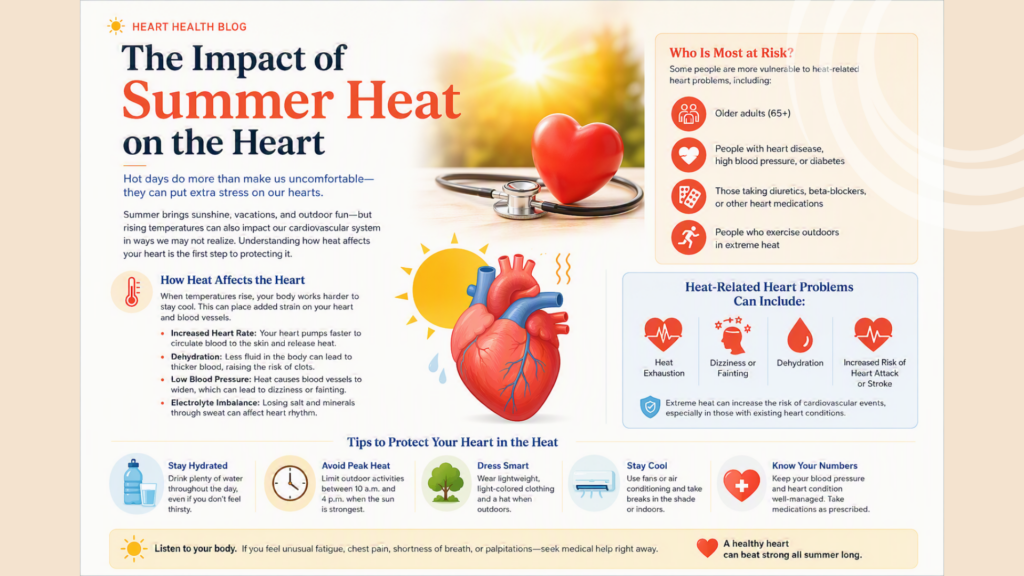
As temperatures rise during the summer months, many people focus on staying cool and hydrated. But what often goes unnoticed is the significant strain that extreme heat can place on the cardiovascular system. While everyone is vulnerable to heat-related illness, individuals with heart disease, high blood pressure, diabetes, or other chronic conditions face an even greater risk. Understanding how summer heat affects the heart can help individuals take proactive steps to protect their health during the hottest days of the year.
Why Heat Makes the Heart Work Harder
The human body is remarkably effective at regulating temperature, just like many of the vehicles on the road today that are equipped with internal coolant systems. When outdoor temperatures climb, the body activates cooling mechanisms such as sweating and increased blood flow to the skin. To support this process, the heart must pump more blood than usual. In the simplest terms, in hot weather the body temperature rises, our blood vessels begin to dilate, and the heart begins to pump harder and faster. We begin to sweat! When we sweat, and yes, it is our “internal protector” we also lose fluids and can begin to dehydrate quickly losing electrolytes and other vital minerals needed to keep us going.
For healthy individuals, this extra workload is usually manageable. However, for those with existing cardiovascular conditions, the additional demand can challenge the heart’s ability to function effectively.
The Link Between Heat and Cardiovascular Events
Research consistently shows an increase in cardiovascular-related hospitalizations and deaths during periods of extreme heat. High temperatures can contribute to:
These factors may elevate the risk of serious events such as heart attacks, strokes, and worsening heart failure symptoms.
Am I at Risk?
Although anyone can experience heat-related stress, certain populations are especially vulnerable and need to take great care and pay attention during the summer months. Those at greater risk include:
Some medications may affect the body’s ability to regulate temperature or maintain proper hydration, making heat exposure even more dangerous.
What should I Watch For?
Recognizing symptoms early on can prevent a minor issue from becoming a medical emergency.
Signs of Heat Stress and Possible Heart Strain
Mild to Moderate Symptoms
Seek Immediate Medical Attention If You Experience
These warning signs should never be ignored, particularly among individuals with known cardiovascular disease.
How can I Protect Myself in Hot Weather?
Fortunately, there are a few ways, a few simple precautions to know that can significantly reduce the risk of heat-related cardiovascular complications.
Summer brings opportunities for outdoor activities, vacations, and family gatherings, but it also presents hidden risks for cardiovascular health. As temperatures climb, the heart works harder to keep the body cool, increasing strain on an already complex and vital system. By staying hydrated, recognizing warning signs, and taking sensible precautions during periods of extreme heat, individuals can enjoy the season while protecting their heart health.
The message is simple: When the temperature rises, heart awareness should rise with it. A little prevention can go a long way toward ensuring a safe, healthy summer. Now get out there and enjoy the Summer!
By Amy Newell
Heart disease is the leading cause of death for women in the U.S., yet many women don’t realize how differently it can appear or progress in us. As caregivers, we…
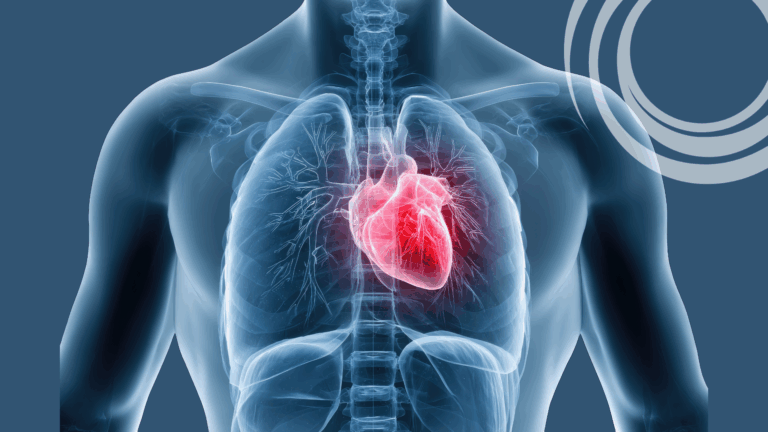
The landscape of cardiovascular care is changing quickly, and organizations that act now can gain a significant advantage. Recent reimbursement changes for Coronary Computed Tomography Angiography (CCTA) and AI-driven plaque…

PITTSBURGH, PA, September 29, 2025 — Today, on World Heart Day, we recognize the urgent need to improve heart health and expand access to quality cardiovascular care across the country.…