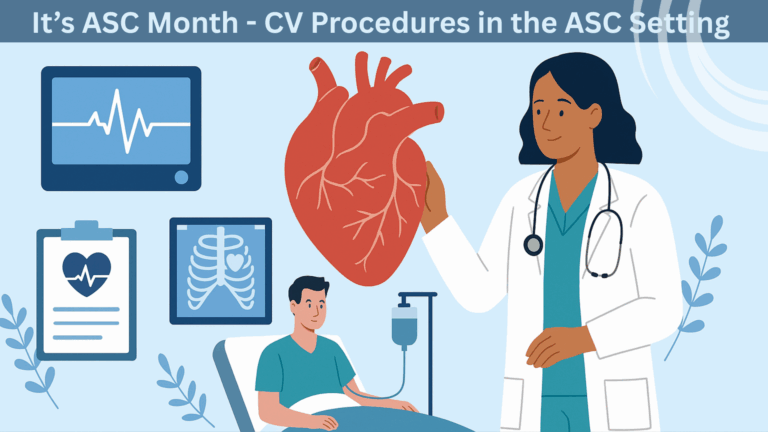
The healthcare landscape is evolving faster than ever, and 2026 is shaping up to be a landmark year for Ambulatory Surgery Centers (ASCs). For decades, ASCs have been synonymous with efficiency, cost savings, and patient convenience. Now, thanks to sweeping changes from the Centers for Medicare & Medicaid Services (CMS), these facilities are poised to take on an even greater role in delivering complex surgical care. The latest expansion of the ASC Covered Procedures List (ASC-CPL) isn’t just a regulatory update—it’s a game-changer that will redefine what’s possible in outpatient surgery. For ASC leaders, this is the moment to think big, act boldly, and position your center for unprecedented growth.
The 2026 Expansion Explained
CMS has finalized the 2026 ASC Payment Rule, introducing one of the most significant expansions of the ASC-CPL in Medicare history. Nearly 550 codes have been added, driven by two major policy shifts. First, CMS revised the criteria for ASC-CPL inclusion, eliminating five exclusion criteria and moving them into nonbinding physician considerations. This change provides greater flexibility and acknowledges the safety and efficiency of ASCs for higher-acuity cases. As a result, 276 new procedures were added under these revised standards, impacting key specialties such as cardiovascular interventions, spine surgeries, and vascular procedures. For example, electrophysiology studies and ablations, percutaneous coronary interventions, and posterior lumbar interbody fusions are now ASC-eligible. Second, CMS has begun a three-year process to phase out the inpatient-only (IPO) list. In 2026 alone, 271 procedures previously restricted to inpatient settings will now be eligible for ASCs, including complex orthopedic and reconstructive surgeries.
Financially, ASCs will benefit from an average 2.6% payment increase for covered procedures in 2026, thanks to a 3.3% inflation update tied to the hospital market basket and a 0.7% productivity adjustment. CMS has also extended the alignment of ASC and hospital outpatient department update factors through 2026, signaling continued support for outpatient surgical care.
Why This Matters and How to Capitalize
This expansion is more than a policy change—it’s a strategic opportunity. ASCs can increase case complexity without sacrificing safety, capture new revenue streams from high-demand specialties like cardiology and spine, and enhance patient access to cost-effective, convenient surgical care. However, with opportunity comes responsibility. More complex cases mean higher operational demands, stricter compliance, and the need for robust infrastructure.
To capitalize on these additions, ASCs should begin by investing in clinical capabilities. Upgrading equipment for cardiovascular and spine procedures, ensuring staff training for higher-acuity cases, and partnering with specialists to expand service lines will be essential. Financial performance must also be optimized through advanced revenue cycle management tools, accurate reimbursement forecasting, and exploring bundled payment models or direct employer contracting. Operational infrastructure should be strengthened by expanding OR space and recovery areas, adopting technology solutions like AI-powered scheduling and robotic-assisted surgery, and enhancing compliance processes to meet ASC Quality Reporting requirements. Strategic partnerships with health systems and physician groups can help ASCs secure joint ventures and negotiate favorable payer rates, positioning them as destinations for complex outpatient care. Finally, expanded marketing will be critical. Educating referring physicians about new ASC capabilities, highlighting patient benefits such as lower costs and faster recovery, and using data-driven outcomes to build trust will help attract new patients and grow market share.
Conclusion
The 2026 ASC-CPL expansion is a watershed moment for outpatient surgery. CMS’s confidence in ASCs reflects a broader trend: complex procedures are migrating to outpatient settings, and patients are demanding care that is accessible, affordable, and high-quality. For ASC leaders, the question isn’t whether to adapt—it’s how quickly you can seize this opportunity. Those who invest in capabilities, strengthen operations, and build strategic partnerships will not only thrive but set the standard for the future of surgical care. The time to act is now. The next era of ASC growth has arrived—are you ready to lead it?
Register for Corazon’s upcoming webinar to learn more about the Inpatient & Outpatient CMS Rulings for 2026 here.
By Lori Griffith
 company
 (412) 364-8200